Building a Solid Wood Desk for Your Home Office: A Step-by-Step Guide
Hey there, fellow home office enthusiasts! You've got that perfect spot picked out for your desk, and you're itching to ditch the flimsy particleboard and build something truly special. A solid wood desk, crafted with your own two hands, will bring a touch of personality and durability to your workspace. This guide will walk you through the process step-by-step, from choosing the right wood to applying the finishing touches. Don't worry, you don't need to be a seasoned woodworker to pull this off. With some patience, basic tools, and a healthy dose of enthusiasm, you'll be well on your way to creating a desk that you'll love for years to come.
1. Planning Your Desk: Design and Materials
Choosing the Right Wood
The type of wood you choose will play a big role in the look and feel of your desk. Here's a breakdown of popular options: * **Hardwoods:** These are generally more durable and resistant to scratches, making them great for desk tops. * **Maple:** Known for its beautiful grain and strength, maple is a good choice for a modern look. * **Cherry:** Warm tones and a rich grain make cherry an elegant choice. * **Oak:** A classic choice, oak is sturdy and stands up well to wear and tear. * **Walnut:** This luxurious wood boasts stunning grain patterns and a dark, rich color. * **Softwoods:** While softer, softwoods can be beautiful and affordable. * **Pine:** A budget-friendly option with a warm, knotty look. * **Cedar:** Offers a unique aroma and natural insect resistance.
Size and Shape
Consider how much space you have and what you'll be using the desk for. A large desk might be ideal for spreading out paperwork, while a smaller, more compact desk might be a better fit for a minimalist setup.
Design Elements
Get creative! Think about the style you're going for. Do you want drawers, shelves, or a simple, sleek design? Sketch out your ideas to visualize the final product.
Materials and Tools
Here's a list of essential materials and tools: * **Wood:** Choose your wood based on your design and budget. * **Lumber:** If you're using pre-cut boards, make sure they're straight and free of defects. * **Wood glue:** A strong, reliable adhesive for bonding wood pieces. * **Screws:** Choose screws that are appropriate for the thickness of your wood. * **Wood filler:** To fill any gaps or holes. * **Sandpaper:** Different grit sandpaper for smoothing and finishing. * **Wood stain (optional):** To enhance the natural color and grain of the wood. * **Wood finish (optional):** A clear sealant to protect the wood from spills and scratches. * **Clamps:** To hold pieces together while the glue dries. * **Circular saw:** For cutting wood to size. * **Measuring tape and pencil:** For marking and measuring. * **Safety glasses and gloves:** Protect yourself from sawdust and splinters.
2. Building the Desk: A Step-by-Step Guide
Now that you have your plan and materials ready, let's dive into the construction:
Cutting the Wood
1. Carefully measure and mark your wood pieces based on your design. 2. Use a circular saw to make accurate cuts. Remember to wear safety glasses and gloves! 3. Use sandpaper to smooth the edges of your cuts.
Assembling the Desk
1. **Base:** Build a sturdy base for your desk, whether it's a simple rectangular frame or something more elaborate. 2. **Top:** Join the top pieces to create a solid surface. Consider adding a center support if needed. 3. **Drawer Boxes (optional):** If you're including drawers, cut and assemble the drawer boxes. 4. **Adding Details (optional):** Attach any shelves, legs, or decorative elements.
Gluing and Clamping
1. Apply wood glue to the joints of the pieces you're joining. 2. Use clamps to hold the pieces together while the glue dries. Make sure the clamps are evenly distributed and apply enough pressure to ensure a strong bond. 3. Follow the drying time recommendations for your glue.
Sanding and Finishing
1. **Sanding:** Once the glue is dry, use different grit sandpaper to smooth the surface of your desk. Start with a coarser grit to remove any rough edges, and gradually work your way to a finer grit for a smooth finish. 2. **Filling Gaps:** Use wood filler to fill any holes or gaps. Let the filler dry completely before sanding it smooth. 3. **Staining (optional):** Apply wood stain evenly to enhance the natural color and grain of the wood. Allow the stain to dry completely before applying a finish. 4. **Finishing (optional):** Apply a wood finish, such as polyurethane or varnish, to protect the wood from spills and scratches. Apply multiple thin coats for a durable finish.
3. Finishing Touches and Care
Accessorizing Your Desk
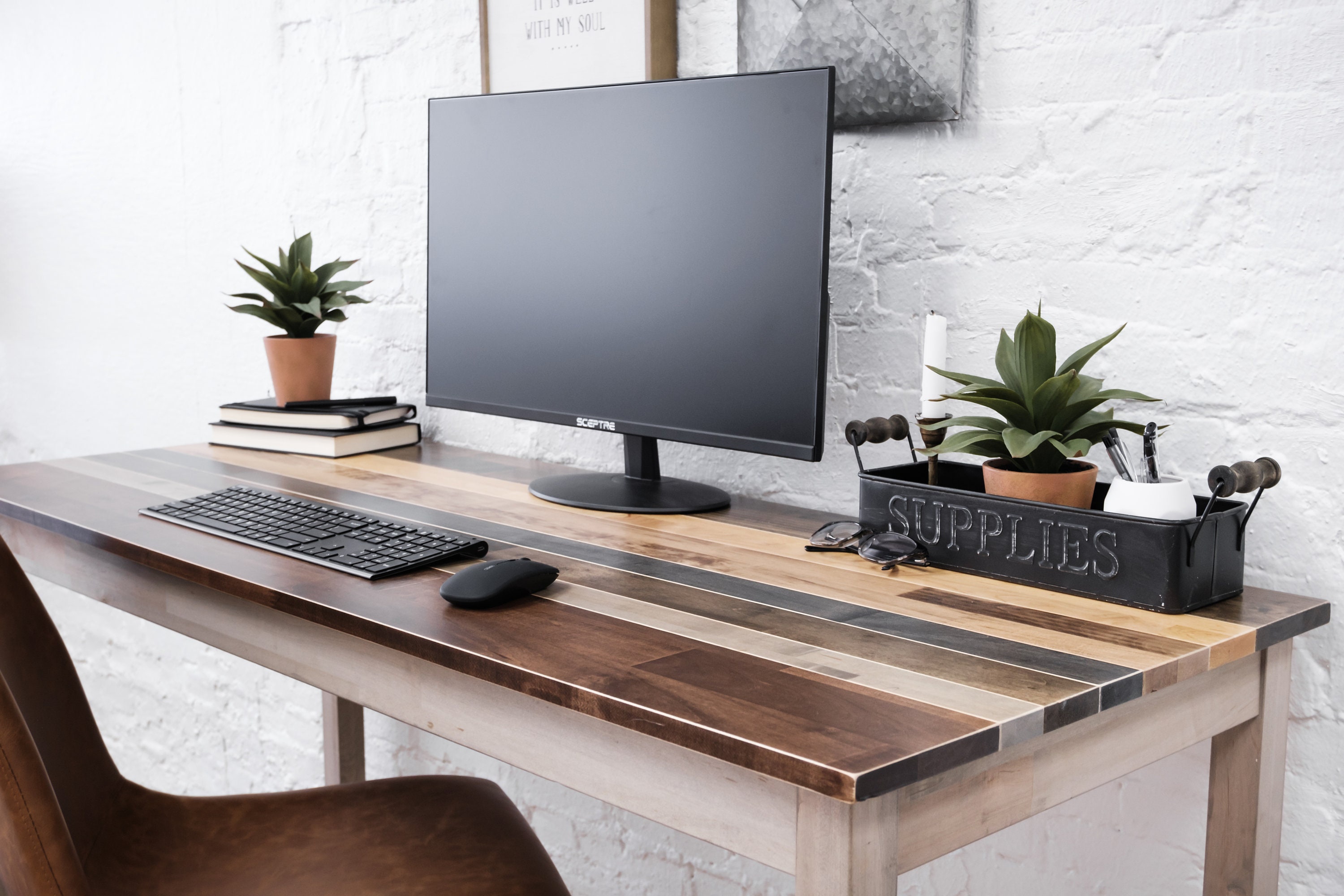
Now comes the fun part! Add some personality to your desk with accessories: * **Organizers:** Choose trays, baskets, or drawer dividers to keep your workspace tidy. * **Lighting:** Good lighting is essential for productivity. Consider a desk lamp or even a combination of overhead and task lighting. * **Plants:** Add a touch of nature to your workspace. Choose low-maintenance plants that thrive in indoor conditions. * **Personal Touches:** Add photos, art, or other personal items that make you happy.
Maintaining Your Wooden Desk
A little care goes a long way: * **Dust regularly:** Wipe down your desk with a soft, dry cloth to remove dust and debris. * **Clean spills promptly:** Use a damp cloth to wipe up any spills immediately. * **Avoid harsh cleaners:** Don't use harsh chemicals or abrasive cleaners on your wooden desk. * **Reapply finish as needed:** Over time, the finish on your desk may wear down. Reapply a thin coat of finish to protect the wood.
Final Thoughts
There you have it â€" a complete guide to building a solid wood desk for your home office. You've chosen the wood, cut the pieces, assembled them, and given it a beautiful finish. Enjoy your new workspace! Remember, the process is just as rewarding as the final product. Take your time, be patient, and don't be afraid to embrace imperfections. After all, handmade furniture is filled with character and tells a unique story. You've put your heart and soul into creating a piece that reflects your personal style, and that's something to be proud of.

 I am a blogger dedicated to sharing insightful, reliable content. My writing combines personal perspectives with trusted sources, offering readers valuable information and inspiration.


No comments:
Post a Comment
Note: Only a member of this blog may post a comment.